.svg)
Every business that buys goods or services from suppliers has to manage vendor invoices. That process, from the moment an invoice arrives to the moment it is paid and reconciled, is vendor invoice management. It sounds straightforward. In practice, for any business handling significant invoice volumes, it is one of the most operationally demanding functions in finance.
Done poorly, vendor invoice management means late payments, strained supplier relationships, duplicate payments, missed early payment discounts, and an audit trail that no one trusts. Done well, it means reliable payment cycles, strong supplier relationships, accurate financial reporting, and a finance team that spends its time on analysis rather than data entry.
This guide covers what vendor invoice management is, how the process works, what goes wrong with manual approaches, and how modern automation transforms the function.
Vendor invoice management (VIM) is the end-to-end process of receiving, validating, approving, posting, and archiving invoices from suppliers. It covers every step from the moment a supplier submits an invoice to the moment that invoice is paid and the transaction is recorded in the accounting system.
In a broader sense, vendor invoice management is the operational infrastructure behind accounts payable. It determines how efficiently an organisation processes its supplier obligations, how accurately it records them, and how reliably it meets its payment commitments.
In a more specific technical context, the term VIM is also associated with OpenText Vendor Invoice Management for SAP, an add-on solution that automates the invoice processing cycle within SAP ERP and SAP S/4HANA environments. We will cover both the general process and the technology context in this guide.
A vendor invoice is a formal payment request from a supplier. It documents the goods delivered or services provided, the agreed price, the payment terms, and the bank details for remittance. It is the supplier's claim on the buyer's accounts payable.
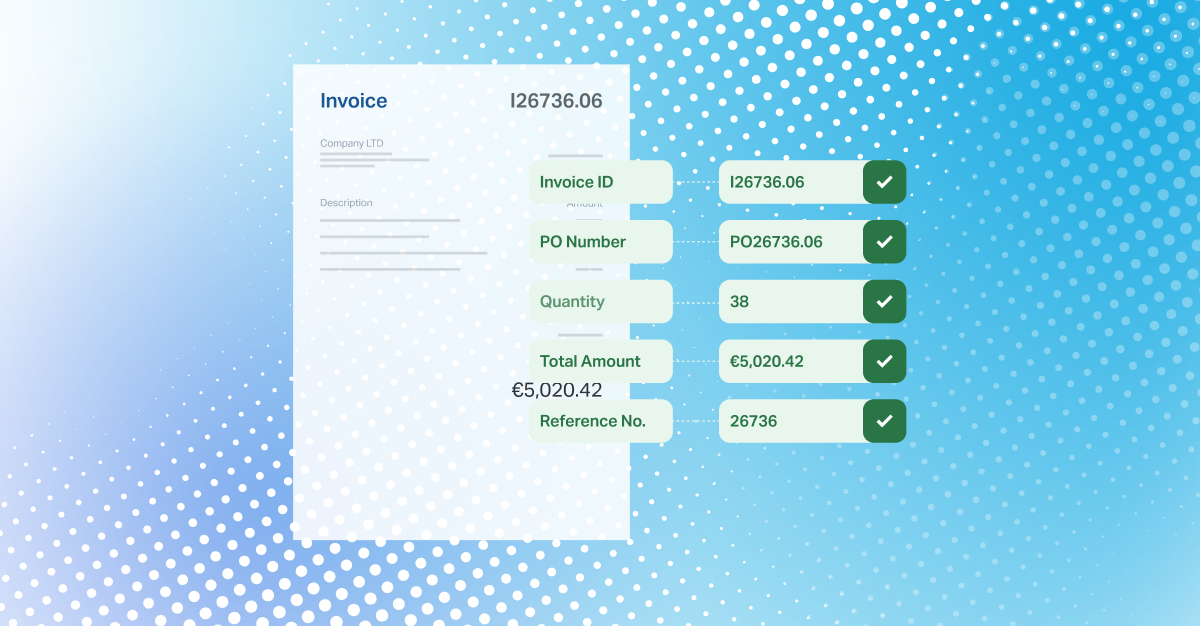
A vendor invoice typically contains:
Not all vendor invoices are the same. PO-based invoices reference a specific purchase order and enable automated matching. Non-PO invoices, for goods or services procured without a formal order, require additional verification steps and are more prone to errors and exceptions.
Effective vendor invoice management matters for reasons that extend well beyond the AP team.
Cash flow accuracy. The AP ledger is only as accurate as the vendor invoice processing behind it. Invoices that are delayed, incorrectly recorded, or duplicated produce cash flow forecasts that do not reflect the business's actual obligations. That inaccuracy affects every financial decision that depends on a reliable picture of outstanding payables.
Supplier relationships. Suppliers who are consistently paid late, who have to chase payment status, or who experience frequent errors on their invoices do not give their best commercial terms to that customer. On-time, accurate payments are a competitive advantage in supplier negotiations.
Compliance and audit readiness. Every vendor invoice represents a financial commitment that auditors will examine. A vendor invoice management process that produces complete, timestamped, auditable records of every step from receipt through approval to payment is significantly easier and less expensive to audit than one that relies on email chains and manual spreadsheets.
Fraud prevention. The vendor invoice is the primary attack surface for accounts payable fraud. A robust vendor invoice management process, with controls embedded at each step, is the first line of defence against duplicate payments, fictitious supplier invoices, and payment diversion schemes.
Under the Commercial Payments Bill currently passing through Parliament, the legal and financial stakes of poor vendor invoice management are also increasing. The 30-day invoice verification window and mandatory payment reporting obligations create regulatory consequences for organisations whose VIM processes cannot keep pace.
The vendor invoice management process follows a consistent sequence regardless of whether it is manual or automated:
Step 1. Invoice receipt. The vendor submits an invoice through an available channel: email, supplier portal, EDI, post, or structured e-invoice format.
Step 2. Invoice capture and data extraction. The invoice data is extracted and entered into the AP system. In a manual process, this involves human data entry. In an automated process, it involves intelligent data extraction that reads the document and populates the relevant fields automatically.
Step 3. Invoice validation. The extracted data is validated against the vendor master: is this a known, approved supplier? Are the bank details consistent with the records on file? Is the invoice number a duplicate of one already processed?
Step 4. Three-way matching. For PO-based invoices, the invoice is compared against the corresponding purchase order and delivery note. Price, quantity, and supplier must align within the defined tolerances. Discrepancies generate exceptions for review.
Step 5. Approval routing. The validated and matched invoice is routed to the appropriate approver based on the configured approval workflow. The approver confirms the business validity of the invoice and authorises payment.
Step 6. Invoice posting. The approved invoice is posted to the accounting system, updating the AP ledger and the relevant cost centre accounts.
Step 7. Payment scheduling. The invoice is scheduled for payment according to its terms and the payment run configuration.
Step 8. Payment execution. Payment is made through the appropriate channel: BACS, Faster Payments, CHAPS, or international transfer.
Step 9. Reconciliation and archiving. The payment is matched against the invoice in the ledger, the invoice is closed, and the full documentation is archived for audit and compliance purposes.
In a traditional, manual vendor invoice processing workflow, most of the steps above involve human action at every point.
An invoice arrives by email. Someone opens the attachment, reads the details, and enters them into the ERP or accounting system by hand. The entry is checked for obvious errors. The invoice is then forwarded by email to the relevant approver, who replies to confirm approval. The AP team receives the approval confirmation, records it, and queues the invoice for the next payment run. At payment time, the AP team prepares a payment file, uploads it to the banking portal, and applies dual authorisation. The bank confirmation is later matched back against the invoice manually.
For a business processing a moderate number of invoices each month, this process consumes a significant proportion of the AP team's time. The average manual invoice processing cost is $15, and the average cycle time is 14.6 days. Almost 40% of manually processed invoices contain errors that require investigation and correction.
The traditional workflow works at low volume. It becomes progressively less reliable and more expensive as volume grows.
Volume and speed. Manual processing scales linearly with invoice volume. Every additional invoice requires the same amount of human time. As the business grows, the AP team either grows with it or falls behind.
Error rates. Manual data entry introduces errors at every step. 39% of invoices processed manually contain errors, ranging from minor coding discrepancies to incorrect payment amounts. Each error requires investigation, correction, and in some cases, supplier contact.
Lack of visibility. In a manual workflow, knowing the status of any given invoice requires asking someone. There is no real-time view of what is in the approval queue, what is overdue, or what is at risk of missing payment terms.
Approval bottlenecks. Email-based approval chains depend on approvers noticing and acting on forwarded emails under time pressure. When an approver is unavailable, invoices wait. When payment terms are tight, they miss.
Duplicate payment risk. Without systematic duplicate detection, the same invoice can be entered and paid twice, particularly when it arrives through multiple channels or is resubmitted by the supplier after an initial query.
Audit trail limitations. Email threads and spreadsheets produce an incomplete and unreliable audit trail. Reconstructing the approval history for a specific invoice weeks or months later is time-consuming and often produces gaps that auditors flag.
Fraud exposure. Manual processes are significantly more vulnerable to invoice fraud than automated ones. There is no systematic check for anomalies in supplier behaviour, no automatic alert on bank detail changes, and no real-time duplicate detection.
AP automation addresses each of the challenges above at the process level rather than through additional headcount.
Invoice capture becomes touchless. AI-native data extraction reads any invoice format from the first document, without templates, and extracts data at line-item level with accuracy rates approaching 99%. The data entry step that absorbs the most AP team time in manual environments is eliminated.
Validation and matching are systematic. Duplicate detection, vendor master validation, and 3-way matching all run automatically on every invoice. Exceptions are surfaced with context, not buried in email chains.
Approval workflows become reliable. Automated routing sends every invoice to the correct approver based on configured rules. Reminders and escalation run automatically. Mobile and email approval keeps the process moving without requiring approvers to log into a desktop system. The approval workflow produces a complete audit trail of every action.
Fraud controls are embedded. Bank detail changes trigger automatic holds. Anomalies in supplier behaviour are flagged in real time. Segregation of duties is enforced by the system rather than through informal convention.
Processing cost and cycle time improve substantially. Ardent Partners' research puts the best-in-class cost per invoice at $2.78 and the best-in-class processing cycle at 3.1 days, compared to the manual averages of $15 and 14.6 days. Organisations that have moved to automated vendor invoice management consistently report processing cost reductions of 78% and average ROI of 200% within the first year.
Modern automated vendor invoice processing follows the same steps as the manual workflow, but with human intervention concentrated at the exception points rather than throughout.
Invoices are captured from any channel including email, supplier portal, EDI, and structured e-invoice formats, through a centralised intake layer that classifies each document by type before processing begins.
AI-powered data extraction reads the invoice at line-item level, identifying and extracting supplier details, invoice number, date, amounts, and line-item descriptions without manual input. For SAP environments, this is where OpenText VIM's Intelligent Capture module operates, or where modern AI-native platforms like Dost apply their extraction logic directly within the AP workflow.
Automated validation checks the extracted data against the vendor master, compares it against existing invoice records for duplicates, and verifies that the supplier's bank details are consistent with those on file.
Three-way matching compares the invoice against the purchase order and delivery note, within configured tolerance thresholds. Matched invoices proceed automatically. Exceptions are routed with full context for human review.
Approval routing sends the validated invoice to the correct approver based on amount, supplier category, or cost centre, with automatic reminders and escalation for pending actions.
Posting and payment happen automatically for approved invoices, with the payment method selected based on supplier configuration and due date, and bank confirmation updating both the AP platform and the ERP simultaneously.
Reconciliation runs continuously, matching payments to invoices in real time rather than in a periodic batch.
Centralise invoice intake before automating it. A vendor invoice management system that accepts invoices from multiple disconnected channels will have visibility gaps regardless of how well the downstream automation is configured. A single intake layer that captures all invoices, regardless of channel, is the foundation everything else builds on.
Clean the vendor master before go-live. Duplicate vendor records and outdated bank details generate exceptions from the first invoice. A structured vendor master clean-up before implementation prevents months of downstream friction.
Configure tolerance thresholds by supplier category. Not all invoice discrepancies are created equal. A 0.5% price variance from a high-volume commodity supplier may be acceptable within standard contract terms. The same variance from a low-volume professional services supplier may warrant investigation. Tolerance rules configured by category produce fewer false positives and better exception quality.
Build fraud controls into the workflow, not as a separate layer. Bank detail change alerts, new vendor invoice holds, and anomaly detection that runs at the matching step catch fraud before payment rather than after it.
Review exception patterns monthly. The exception report is not just a list of problems to resolve. It is a source of information about where the configuration needs adjustment. Suppliers who generate frequent exceptions may need adjusted tolerance rules. Exception types that recur may indicate a data quality issue in the vendor master.
Integrate with your ERP in real time. A vendor invoice management system that syncs with the ERP in nightly batches leaves the ERP a day behind the AP platform. Real-time bidirectional sync, as Dost provides natively with SAP, Microsoft Dynamics 365 Business Central, Sage, and Oracle, keeps both systems current and eliminates the reconciliation overhead that batch sync creates.
Vendor invoice management (VIM) is the end-to-end process of receiving, validating, approving, posting, and paying invoices submitted by suppliers. It covers every step from invoice receipt through to payment reconciliation and archiving. The term is also associated specifically with OpenText Vendor Invoice Management for SAP, an enterprise add-on that automates this process within SAP ERP and S/4HANA environments. In a broader sense, vendor invoice management is the operational infrastructure behind accounts payable: the process that determines how efficiently an organisation handles its supplier payment obligations.
A sales order is a document that a buyer raises to commit to purchasing goods or services from a supplier. It records what is being ordered, in what quantity, at what price, and on what terms. A vendor invoice is a document that the supplier submits after the order is fulfilled, requesting payment for the goods or services provided. The sales order is the buyer's commitment. The vendor invoice is the supplier's claim on payment against that commitment. In a well-designed AP workflow, the two are linked through 3-way matching: the vendor invoice is compared against the purchase order and the delivery note to confirm that the payment request corresponds to what was actually ordered and received.
In practice, the terms are often used interchangeably, but there is a subtle distinction. A vendor invoice is the formal document submitted by a supplier requesting payment, typically used in B2B contexts. A bill is a broader term that can refer to any payment demand, including utility bills and other recurring charges, and is more commonly used in consumer contexts or in accounting software aimed at smaller businesses. In accounting systems, a bill is often how a vendor invoice is recorded once it enters the AP workflow. The underlying document is the same. The terminology reflects the context in which it is being discussed.
Vendor invoice management is not a back-office function. It is the operational infrastructure behind every payment a business makes to its suppliers, and its quality shows up directly in cash flow accuracy, supplier relationships, fraud exposure, and audit readiness.
The traditional manual workflow handles the basics at low volume and becomes progressively more expensive and error-prone as volume grows. Modern automated vendor invoice management, whether through purpose-built AP platforms or enterprise solutions like VIM for SAP, changes the economics fundamentally: from $15 per invoice manually to under $3 with automation, from a 14.6-day cycle to under 3 days, and from a function that requires headcount to scale to one that scales with software.
The starting point is understanding the current process with enough specificity to know what to automate first. The ending point is a vendor invoice management operation that runs reliably, produces a complete audit trail, and allows the finance team to focus on analysis rather than data entry.