.svg)
Ask any finance controller what consumes the most time during month-end close and the answer is almost always the same. Numeric.io's research identifies cash reconciliation as the single most time-consuming activity during the close, consistently ahead of accruals, variance analysis, and reporting.
The scale of that time cost is significant. Ledge's 2025 benchmarks put cash reconciliation at 20 to 50 hours per month in a typical finance team, spread across three to five different systems. And according to the AICPA's 2025 Firm Operations Benchmarking Report, finance teams dedicate 22% of their total capacity to bank reconciliation tasks that generate no direct value for the business.
That 22% is the opportunity. This guide covers how automated payment reconciliation reclaims it, what the process looks like in practice, and what finance teams consistently report on the other side.
Manual bank reconciliation follows a predictable sequence that most finance professionals know well: export a bank statement, export the internal ledger, open both in separate spreadsheets, begin matching transactions row by row, flag the items that do not match, investigate each discrepancy, determine whether it is a timing difference, an error, or a genuine unreconciled item, and update the records accordingly.
For a business processing hundreds of transactions a month, that process is workable at low volume. At higher volume, it scales badly. Each additional transaction is another row to check. Each additional bank account or entity is another set of exports to manage and another reconciliation to run before the results can be consolidated.
The outcome is a process that accelerates in difficulty as the business grows, absorbs disproportionate senior staff time, and produces results that, however carefully done, carry a measurable error rate.
The time in manual reconciliation does not go to the straightforward matches. Those are quick. The time goes to the exceptions: payments that arrived without remittance advice, amounts that do not match exactly, timing differences between bank and ledger, transactions that are in the system under a slightly different reference number than the one on the bank statement.
In a manual process, each exception requires investigation. Someone needs to find the original invoice, cross-reference it with the payment, check whether a credit note was involved, confirm whether the bank has processed it yet, and then decide how to treat it. Multiply that across a month of transactions and the hours accumulate.
Deloitte's 2025 Finance Transformation Survey found that the average month-end reconciliation across all accounts takes 8.4 business days in organisations still running manual processes. Automated firms complete the same workload in 2.1 days, a 75% reduction.
This is the single most common cause of unmatched items in accounts receivable reconciliation. A payment arrives in the bank account. There is no accompanying document that tells the finance team which invoices it covers. The team needs to investigate: check the customer's outstanding balance, make assumptions about which invoices were intended, contact the customer if the amount does not match any obvious combination.
This investigation takes time that scales with customer base size. For businesses with many customers paying on varying schedules, unmatched payments without remittance can consume a significant portion of the AR team's weekly time.
A customer pays part of an invoice. The balance remains. The original invoice is now in a split state that the reconciliation process needs to track correctly. A supplier delivers in two shipments and invoices in two parts. Each part needs to match against the original purchase order and the relevant portion of the delivery.
These scenarios are common in most business-to-business environments. They are handled correctly in manual reconciliation most of the time, but each one requires a deliberate decision about how to treat it. At scale, the volume of decisions required becomes a significant overhead.
For businesses operating across currencies, reconciliation adds the complexity of exchange rate movements between invoice date and payment date, and the potential for differences between the rate applied in the ledger and the rate at which the bank processed the transaction.
Timing differences, where a payment appears on the bank statement before or after it is recorded in the accounting system, create temporary reconciling items that need to be tracked across periods. Managing these manually requires systematic documentation that most spreadsheet-based processes do not maintain reliably.
The Journal of Accountancy's 2025 Technology Impact Report found that error rates in manual reconciliation average 4.2%. That figure reflects the cumulative effect of manual data entry across multiple systems: invoices entered twice, payments recorded under different reference formats, GL entries that do not align with the corresponding bank transaction.
Each of these inconsistencies needs to be found and resolved before the reconciliation can be closed. In a large transaction volume, finding them is itself a significant task.
The foundation of automated reconciliation is a live connection to the bank. Rather than exporting a bank statement at month-end, an automated system ingests bank transactions continuously through an API connection to the bank feed. Every transaction that clears the bank is immediately available in the reconciliation system.
This continuous ingestion is what makes real-time reconciliation possible. The choice is not between month-end and week-end reconciliation. It is between periodic batch processing and continuous matching that runs throughout the month.
ProSight Financial Association research found that organisations using real-time reconciliation tools reduce the time spent on closing books by up to 60%, with productivity improvements of 60 to 80% across the reconciliation workflow.
Rule-based reconciliation systems match on exact criteria: the amount must match, the reference must match, the date must be within a defined window. When any of those conditions is not met, the transaction goes to exceptions.
AI-powered matching is more flexible. It learns from the transaction patterns in your specific business to handle the variations that exact-match rules cannot. A payment from a customer who consistently pays multiple invoices in a single transfer is matched against the most probable combination of outstanding invoices, not rejected as unmatched because no single invoice equals the payment amount. A payment that arrives three days after its expected date is matched correctly rather than flagged as a timing exception.
Gartner's 2025 Finance Automation Benchmark found that automated reconciliation tools achieve a 94.7% automatic match rate on first pass. That means that out of every 100 transactions, 94 or 95 are matched without any human involvement. The remaining 5 to 6 require attention, but the volume reduction transforms reconciliation from a full-time task to a focused exception-handling exercise.
When the system matches a transaction, it assigns a confidence score based on how closely the payment aligns with the invoice or ledger entry it has been matched against. High-confidence matches proceed automatically. Low-confidence matches, where the system's best guess carries significant uncertainty, are routed for human review.
This scoring mechanism means the finance team is not reviewing every transaction. They are reviewing the ones where genuine ambiguity exists, with the system's proposed match and the reasons for its uncertainty already surfaced. Resolution is faster because the context is already assembled.
Items that cannot be matched automatically, even with AI-powered logic, appear in an exceptions queue with the available context: the bank transaction details, the open invoices or payments that might relate to it, and any historical patterns that could inform the decision. The finance team member reviewing the exception has everything they need to make a decision without leaving the system.
Every resolution is recorded, which serves two purposes: it contributes to the system's learning and improves future match rates, and it creates the audit trail that compliance requires.
The most significant structural change that automated reconciliation enables is the shift from periodic to continuous. In a manual process, reconciliation happens at month-end because that is when the team has time to do it. In an automated process, matching happens as transactions occur, throughout the month.
By the time the calendar reaches month-end, the reconciliation is mostly already done. The close becomes a review and confirmation exercise rather than a data assembly exercise. Exceptions that accumulated during the month have already been surfaced and resolved, rather than appearing all at once in the final days.
AutoRek's reported outcomes are consistent with this pattern: organisations can achieve over 50% cost reduction and save up to 75% of the time previously spent on reconciliation tasks.
The Deloitte data cited above, 8.4 days to 2.1 days, represents the average improvement observed across organisations that moved from manual to automated reconciliation. That 75% reduction in close time is the headline figure.
What underlies it: fewer exceptions to investigate at month-end, cleaner data throughout the month, and a team that arrives at month-end with most of the matching already completed rather than starting from scratch.
And error rates change substantially: from 4.2% in manual processes to 0.3% in automated ones, according to the Journal of Accountancy 2025. For a business processing a thousand transactions a month, that is the difference between 42 errors requiring investigation and 3.
The most important question after reconciliation is automated is not how much time was saved but what the recovered capacity is used for. In the finance teams that get the most from reconciliation automation, the answer is consistent: more time on exception investigation that requires genuine judgement, more time on cash flow analysis and forecasting, and more time on the strategic financial work that the month-end scramble previously crowded out.
That reallocation is the compounding benefit of reconciliation automation. The efficiency gain in the reconciliation process itself is measurable and significant. The quality improvement in everything downstream from better, more current financial data is harder to quantify but often larger.
The most important technical requirement for any reconciliation platform is the quality of its integration on both sides: the bank feed and the ERP. A platform that requires manual bank statement exports, even if everything downstream is automated, has not eliminated the manual step that creates the most delay. And a platform whose results do not feed back into the ERP in real time creates a reconciliation that exists in one system but not in the system of record.
Ask any vendor specifically: how does bank feed data enter the system, how frequently, and through what mechanism? And how do reconciled items update the ERP, in real time or in a batch, and with what data fields?
For businesses with multiple entities or international operations, reconciliation complexity multiplies. A platform that handles single-entity, single-currency reconciliation well may not handle the consolidation, currency conversion, and intercompany matching that multi-entity businesses require.
Verify the specific capability, not the general claim. Multi-currency support can mean different things: automatic exchange rate application, support for manual rate override, correct treatment of currency gains and losses. Each of these matters for accuracy.
The audit trail produced by automated reconciliation should be complete without requiring anyone to maintain it. Every match, every exception resolution, every override of an automated match should be timestamped and attributable to a specific user or system action. That trail is what auditors review and what the Commercial Payments Bill's mandatory payment reporting requirements will rely on.
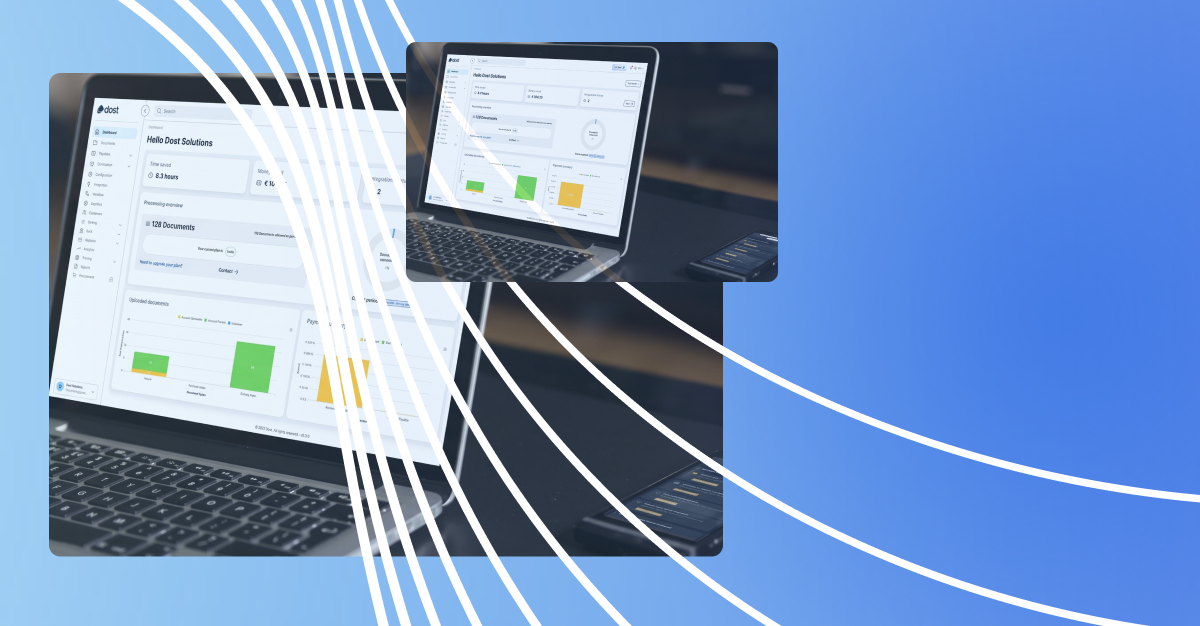
Dost's payment reconciliation is integrated directly into the AP and AR automation workflow rather than operating as a standalone module. Incoming payments on the AR side are matched automatically against outstanding invoices using AI-powered matching that handles partial payments, combined transfers, and payments without remittance advice. Outgoing payments on the AP side are confirmed and matched against approved invoices and supplier records, with the payment confirmation updating both the AP ledger and the ERP simultaneously.
The result is a working capital view that is current at any point in the month, not just at close. The accounts receivable position and the accounts payable position are visible together, connected to the bank balance, in a single dashboard.
The complete audit trail, from invoice receipt through approval through payment through reconciliation, is maintained automatically and available for review without any manual compilation.
For a business using a supported ERP and banking through a major institution with API-accessible bank feeds, the technical setup for automated reconciliation typically takes two to three weeks. The more variable element is the matching rule configuration: defining the thresholds, tolerances, and exception routing logic that reflect your business's specific transaction patterns. This configuration work benefits from involving the finance team members who currently do the manual reconciliation, because they understand the edge cases that the rules need to handle. A well-configured system is live within four to six weeks of project start.
They appear in an exceptions queue with relevant context already assembled: the bank transaction details, the open invoices or ledger entries that might relate to it, and any historical patterns. The finance team member reviewing the exception sees a proposed match from the system where one is available, along with the confidence score and the reason the system is not proceeding automatically. Resolution is faster than in manual reconciliation because the context is already surfaced. And every resolution, whether it confirms the system's proposed match or overrides it, is recorded and contributes to improving future match rates.
Yes, for platforms designed with multi-currency support from the architecture up. This covers automatic application of exchange rates at the transaction level, correct treatment of currency gains and losses on the reconciliation, and reporting that consolidates multi-currency positions accurately. The specific implementation varies between platforms: some apply central bank rates, some allow user-configured rate sources, and some support manual override for specific transactions. For businesses with significant foreign currency transaction volumes, this is one of the most important capabilities to verify in detail during vendor evaluation, because the difference between adequate and excellent multi-currency handling shows up directly in reconciliation accuracy.
Automated payment reconciliation reclaims the single largest block of manual time in the finance close process. The benchmarks are consistent: 75% faster processing, error rates that drop from 4.2% to 0.3%, and a close cycle that shortens from days to hours when reconciliation runs continuously rather than in a batch at period-end.
The change this enables is structural, not just operational. A finance team whose reconciliation runs automatically throughout the month arrives at month-end with the work mostly done. The close is confirmation, not assembly. And the current, accurate financial data that continuous reconciliation produces improves the quality of every decision that depends on it.
The starting point is straightforward: a bank feed connection, an ERP integration, and a matching logic that reflects your business's transaction patterns. Everything builds from there.