.svg)
The global AP automation market is on track to reach $6.94 billion in 2026, up from $6.17 billion the previous year, and projected to hit $12.46 billion by 2031. The investment reflects genuine urgency: finance teams processing invoices manually are spending 10 to 12 days per invoice on routing and validation, at a cost of between $3 and $15 per document depending on complexity.
Yet adoption lags behind the numbers. A recent survey of 225 mid-market finance leaders found that only 4% have achieved full invoice-to-payment automation. 89% are stuck somewhere in the middle, with partial automation that has reduced some manual work but left significant gaps in the cycle.
The gap between where the market is and where it needs to be creates two questions that this guide addresses directly: what does invoice automation software actually do when it is working correctly, and what separates the platforms that close the remaining gaps from the ones that digitise the manual steps without removing them?
Invoice automation software is a platform that handles the steps between receiving a supplier invoice and authorising payment without requiring a person to execute them manually. At its core, it covers five distinct operations:
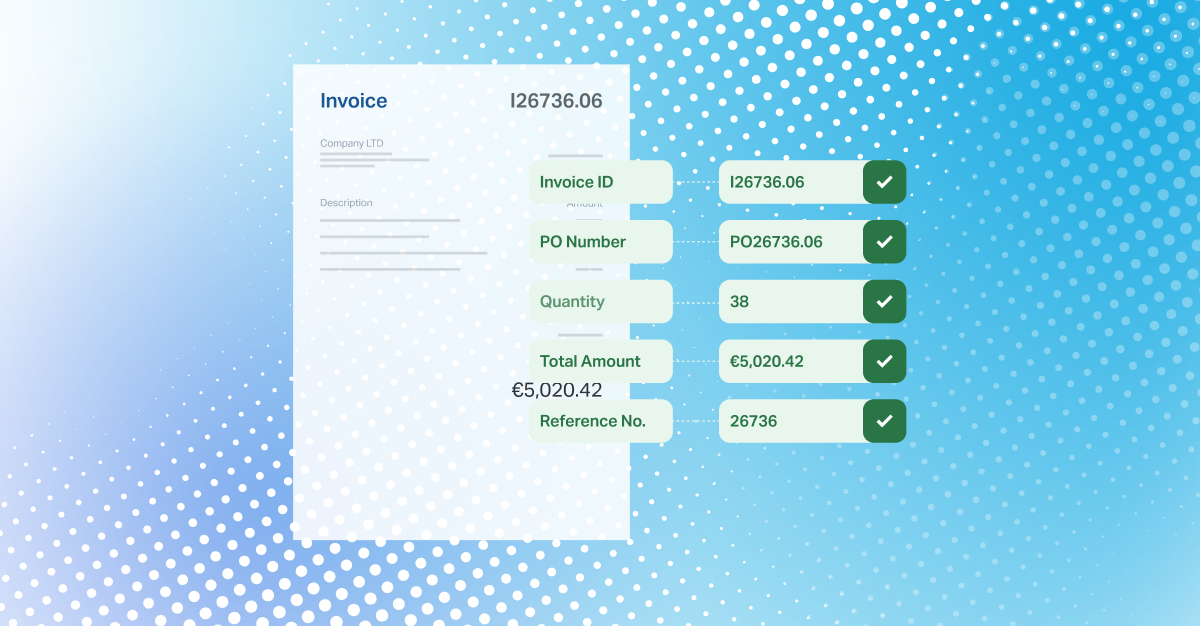
Capture: reading invoice data from any document format, in any layout, from any supplier, without manual data entry or template configuration.
Validation: checking the extracted data against the vendor master, flagging duplicates using fuzzy matching, and confirming the invoice references a known, approved supplier.
Matching: comparing the invoice against the corresponding purchase order and delivery note at line-item level, within configurable tolerance thresholds, to confirm the transaction is legitimate before it reaches an approver.
Approval routing: sending matched invoices to the correct approver based on configured rules, with automatic escalation when approvals stall and a complete audit trail on every action.
ERP posting: recording the approved invoice in the accounting system in real time, without manual re-entry, and updating the ledger continuously rather than in overnight batches.
Platforms that cover all five operations are genuinely automating the invoice process. Platforms that cover two or three of them are removing some manual steps while leaving others in place. The distinction becomes expensive when invoice volume grows and the manual steps that remain become the bottleneck.
Understanding the invoice automation process in practice, rather than in theory, is the most useful frame for evaluating whether a platform is doing what it claims.
Before automation: an invoice arrives by email. Someone opens it, reads the data, and keys it into the ERP. They locate the corresponding purchase order, compare the amounts, and escalate any discrepancy to the relevant person. The approved invoice enters a payment queue and is posted manually when payment runs. On average, this cycle takes 10 to 12 days. Nearly a quarter of businesses process more than 10,000 invoices per month at this pace, which means the AP team is spending most of its time on data entry and manual comparison.
After automation: the invoice arrives through any channel and is captured automatically on receipt. Data is extracted at line-item level and validated against the vendor master. A duplicate check runs across the full invoice history. The three-way match compares each line against the purchase order and delivery note and either passes the invoice or flags a specific discrepancy. The matched invoice routes to the correct approver, who receives it through email or mobile and approves with a single action. The approved invoice posts to the ERP immediately. The cycle that took 10 to 12 days takes under 3.
The AP team's day changes from opening PDFs and entering data to reviewing exceptions with context already assembled and managing the supplier relationships that the automated process identifies as needing attention.
The invoice automation market contains platforms built on fundamentally different architectures. The differences are not visible in feature lists, which look nearly identical across vendors. They become visible in three specific situations: when a new supplier submits their first invoice, when an invoice does not match the purchase order exactly, and when the platform needs to post approved invoices to the ERP in real time.
Optical character recognition reads text from a document and extracts it based on its position on the page. Rules then look for data fields in predefined locations: vendor name in the top-left, invoice number on line three, total in the bottom-right. When suppliers follow that layout reliably, this works. When they do not, it creates an exception.
AI-native document understanding identifies fields by what they are structurally, not where they appear. The same model that reads a standard A4 invoice reads a complex multi-page delivery statement from a new supplier correctly on its first submission. No template, no training period, no configuration delay.
For businesses with large or growing supplier bases, this architectural difference determines whether onboarding a new supplier is a ten-minute process or a multi-day configuration task.
Template-based platforms require supplier-specific configuration before that supplier's invoices can be processed automatically. High-volume suppliers with stable formats get templates and process smoothly. Low-volume suppliers, new suppliers, and those who change their formats regularly generate manual handling.
The result is that automation covers the suppliers you already process well and leaves the new and occasional ones on the manual stack. For any business that is growing its supplier base, the manual layer grows proportionally rather than shrinking.
Template-free platforms process any invoice correctly from the first document. The new supplier who invoiced for the first time this month receives the same automated treatment as the supplier you have worked with for three years.
Many invoice automation platforms post approved invoices to the ERP on a scheduled cycle: overnight, hourly, or at end of day. During the gap between cycles, the AP platform and the ERP show different outstanding balances, different committed spend figures, and different cash positions.
Real-time integration eliminates this gap. Every approval in the AP platform posts to the ERP immediately. The ledger reflects the current position continuously rather than the position as of the last batch run. At month-end close, the reconciliation exercise between what the AP platform shows and what the ERP shows is unnecessary because the two have been in sync throughout the month.
Most vendor evaluations run against curated demo data. The evaluations that hold up over time run against the organisation's actual invoice population. These are the questions that distinguish platforms which will scale with your business from those that will require replacement when your needs grow.
On extraction: what is your accuracy rate on first-time invoices from suppliers not previously seen by the system? Ask for this number specifically, not accuracy on the full invoice population which is biased toward known, well-formatted suppliers.
On matching: does three-way matching operate at line-item level or invoice total level? A match on totals misses unit price discrepancies and quantity overcharges on individual lines.
On integration: when an invoice is approved in your platform, how quickly does that approval appear in our ERP? The answer should be immediate, not "within the next sync cycle."
On exceptions: when an invoice fails matching, what does the AP team see? The answer should be the specific discrepancy, the three relevant documents, and the supplier's historical pattern. Not a flag that requires the team to investigate from scratch.
On scalability: when invoice volume doubles, does processing time scale proportionally or stay constant? Template-based systems require proportional configuration work as volume grows. AI-native systems absorb volume without it.
Dost's AP automation platform covers the full invoice automation process from capture to ERP posting with AI-native architecture throughout.
The data extraction engine reads any invoice format at line-item level from the first document, with no templates and no supplier-specific configuration. Extraction accuracy reaches 95% from the first invoice processed, including invoices from suppliers the system has never seen before.
Three-way matching compares each invoice line against the corresponding purchase order line and delivery note from the ERP, in real time, with configurable tolerance thresholds. Exceptions surface with the specific discrepancy and full document context.
The approval workflow routes invoices based on amount, cost centre, supplier, and entity, with mobile approval, automatic escalation, and a tamper-evident audit trail on every action.
ERP posting is bidirectional and real time. Dost integrates natively with SAP, SAP Business One, Microsoft Dynamics 365 Business Central, Sage 200, Sage Intacct, Sage X3, and Oracle. Approved invoices post immediately. Vendor master changes sync in both directions. There is no batch window and no reconciliation at month-end.
The result across our customer base: 95% extraction accuracy, 80% reduction in processing costs, 90% reduction in time spent on manual AP tasks.
Book a demo to see Dost processing your own invoices from day one.
Invoice automation software focuses specifically on the invoice processing cycle: capture, validation, matching, approval, and posting. Accounts payable software is a broader term that sometimes includes procurement, supplier management, payment execution, and working capital tools. Many businesses use the terms interchangeably because invoice processing is the core function of most AP platforms. The distinction matters when evaluating scope: if the primary problem is invoice capture and approval cycle time, an invoice automation platform addresses it directly. If the problem also includes procurement control and strategic payment timing, a broader AP suite may be relevant.
The financial case typically becomes compelling at around 200 invoices per month, where the manual processing cost at $10 to $15 per invoice starts to exceed the cost of a well-priced automation platform. At 500 invoices per month, the saving is substantial even at the lower end of manual processing cost estimates. Beyond the direct cost, the time saved at any volume has value in the capacity it returns to the finance team for higher-value work. Businesses processing fewer than 200 invoices monthly are usually better served by improving their ERP's native AP functionality before adding a dedicated platform.
For a mid-market business using a supported ERP in a standard configuration, go-live typically takes four to six weeks from contract signature. The main variables are vendor master data quality, which affects how quickly matching can be configured, and approval hierarchy complexity. Businesses with multiple entities, heavily customised ERPs, or large backlogs of unresolved supplier data issues consistently take longer. A data readiness review at the start of the project surfaces the issues most likely to affect the timeline before implementation begins.
Invoice automation software covers the full cycle from invoice receipt to ERP posting, removing the manual steps that consume AP team capacity and introduce errors at every handoff. The platforms that deliver on that promise are built on AI-native document understanding, template-free processing, line-item matching, and real-time ERP integration. The ones that do not deliver partial improvements at incremental cost, leaving the manual layer thinner but still present.
The 4% of mid-market finance teams that have achieved full invoice-to-payment automation and the 89% still stuck in the middle are not separated by a lack of available technology. They are separated by the quality of the platform they chose and the depth of the integration it operates on.
See how Dost handles invoice automation across your supplier base and ERP. Book a demo.