.svg)
Yooz is a well-known name in accounts payable automation. With over 7,000 customers and 300 million invoices processed, it has built a strong position in the market. Its all-inclusive pricing model, covering unlimited users, workflows, and entities under a single subscription, is a genuine differentiator for teams concerned about per-seat cost escalation.
But known and right for your business are different things.
Every finance team has its own ERP, its own invoice volume, its own compliance requirements, and its own definition of what automation should actually deliver. For teams that have evaluated Yooz and found it short on one or more of those dimensions, the market in 2026 offers significantly more choice than it did even two years ago.
In this guide we cover 15 alternatives, starting with our own platform. We have tried to be honest: each solution on this list has a genuine use case, and the goal is to give you the criteria to make a clear decision rather than simply to sell you on one option.
Before the list, it is worth being specific about where Yooz typically falls short. The limitations most commonly cited by teams who have evaluated or used it are:
PO reconciliation depth. Yooz's 3-way matching capabilities lag behind platforms built specifically for that workflow. For businesses where PO-based invoice matching is the core of the AP process, this is a significant gap.
ERP integration quality. Some of Yooz's ERP integrations operate on batch sync rather than real-time data exchange. For finance teams that need their AP platform and ERP to reflect the same data at all times, batch sync creates lag that affects reporting accuracy and close cycle reliability.
Reporting capability. Yooz's reporting is functional for basic visibility but does not hold up well for complex financial analysis or multi-entity consolidated reporting.
AR and full-cycle coverage. Yooz focuses primarily on the AP side of the ledger. Teams looking to automate AR, bank reconciliation, and the full working capital cycle will find they still need additional tools.
UK regulatory alignment. Yooz is a US-founded company with European offices. For teams navigating Making Tax Digital, the Commercial Payments Bill, and the upcoming e-invoicing mandate, UK-native or EU-focused vendors often provide more specific support.
With those criteria in mind, here are 15 alternatives worth evaluating.
We start here because we compete in this market and know it well. Dost is an AI-native finance automation platform that handles accounts payable, accounts receivable, payments, and bank reconciliation as a single connected process. We were selected for the inaugural Barclays AI:100 as one of the fastest-growing AI companies in Britain, and ranked #21 in the Sifted 100: Southern Europe 2026.
What distinguishes Dost from Yooz and most alternatives on this list:
AI-native architecture, not AI features. Dost was built with AI as the operating logic from day one. Our intelligent data extraction reads any invoice format at line-item level from the first document, with no templates and no training period. That is meaningfully different from a platform where AI was added to a rules-based system.
Full AP and AR cycle in one platform. Dost automates the complete financial cycle: invoice capture, 3-way matching, approval workflows, supplier payments, customer invoicing, collections, and bank reconciliation. Teams that want a single view of their working capital do not need to add modules or connect separate tools.
Real-time ERP integration from day one. Native, bidirectional connections with SAP, SAP Business One, Microsoft Dynamics 365 Business Central, Sage 200, Sage Intacct, Sage X3, and Oracle. Not batch sync. Real-time.
Line-item extraction without templates. Unlike most AP automation platforms, Dost reads every line of every invoice separately. This matters for businesses with multi-line invoices, complex cost centre allocation, or high-volume PO matching.
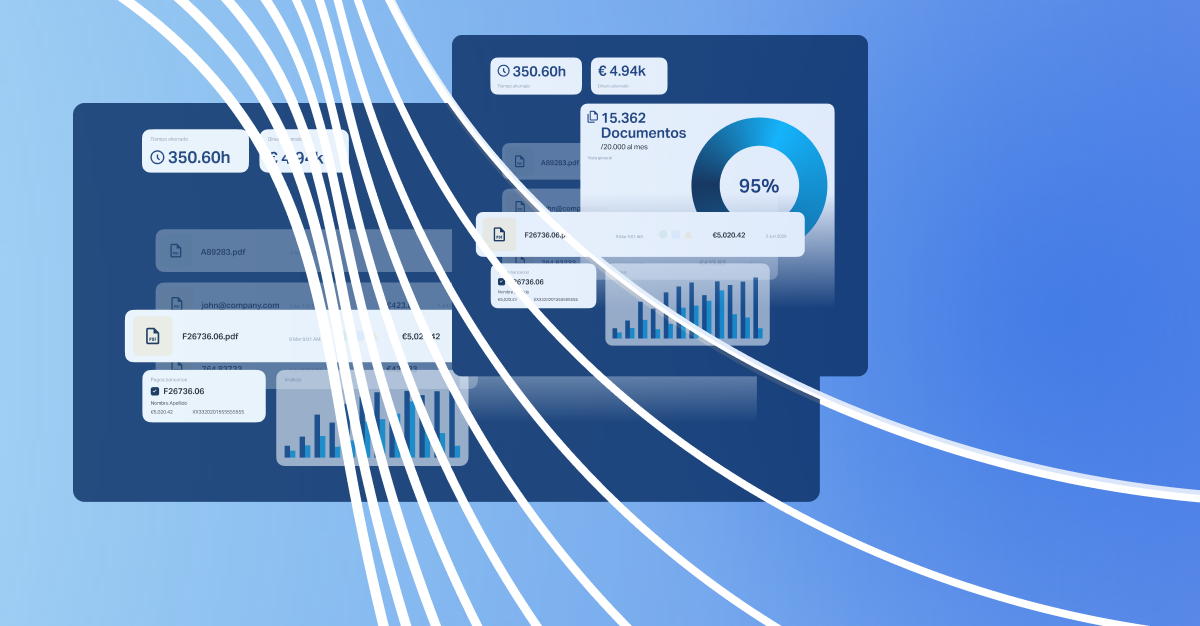
95% data extraction accuracy from document one, 80% reduction in processing costs, 90% time saved on manual processes. These are the results our customers report consistently.
If you are looking for an alternative that combines AI-native intelligence, full-cycle coverage, and deep ERP integration, this is what we have built. That said, here are the other 14 options worth your time.
Rillion is one of the strongest mid-market AP automation platforms available in the UK in 2026 and our most direct comparable in terms of target customer. It offers AI-powered invoice capture with over 90% coding accuracy, dynamic approval workflows, and integrations with more than 50 ERPs including Microsoft Dynamics, Sage, SAP, and NetSuite.
Rillion's AI assistant Riley can answer questions about invoice status, workflow, and product guidance. Multi-entity and multi-currency support make it a good fit for companies managing multiple business units. The absence of a native mobile app is noted by some users, though mobile approval is available via browser. Best suited to businesses processing 10,000 or more invoices annually.
Stampli takes a collaboration-first approach to AP: communications, questions, and approvals sit directly alongside the invoice document, reducing the back-and-forth that causes approval delays. Its AI assistant Billy the Bot suggests GL coding and learns from your team's decisions over time.
Stampli is fast to deploy and genuinely easy for non-finance approvers to use. Its primary orientation is the North American market, which shows in some integration depth and support responsiveness for UK-specific requirements. A good choice for teams that prioritise adoption speed and collaborative workflows.
Tipalti is built primarily for businesses with complex global supplier payments: multi-currency transfers, international tax compliance, and supplier onboarding across jurisdictions. If your AP challenge is primarily about paying suppliers in 50 countries accurately and compliantly, Tipalti is worth serious evaluation.
For businesses whose payables are primarily domestic, Tipalti's pricing structure and implementation overhead may not be justified. It is an enterprise-grade platform with enterprise-grade complexity and cost.
ApprovalMax is a UK-relevant, approval-workflow-first platform that integrates tightly with Xero and QuickBooks Online. It excels at multi-step approval routing, financial control, and audit trail completeness, and it is notably strong on segregation of duties enforcement.
Pricing starts around £32.50 per month for basic approval workflows, with the Premium tier at approximately £72.50 per month for unlimited approvals and multi-step workflows. For finance teams whose primary pain point is email-based approval chaos rather than invoice capture complexity, ApprovalMax is the first tool to evaluate. It does less on the capture and extraction side, so many teams use it alongside a capture tool.
Quadient, built on the Beanworks platform, is a solid mid-market AP automation solution with good PO matching, customisable approval workflows, and real-time reporting. Lush UK selected Quadient in 2026 to modernise its AP operations, which is a meaningful validation for the UK market.
The platform covers invoice capture, approval routing, PO matching, and vendor payments in one connected workflow. The consistent criticism in user reviews is implementation complexity and configuration time, which can slow time-to-value. Teams with complex approval hierarchies sometimes find configuration demanding without significant vendor support.
Lightyear is a UK-born AP automation platform with a strong focus on line-item capture, purchase order matching, and Xero integration. It captures invoice data including VAT amounts at line-item level, runs automated approvals, and performs PO matching.
Lightyear does not execute payments directly: payment happens through your bank or a separate payment rail, which suits UK finance teams that want to keep payment control in-house. Pricing is based on document volume, with indicative starter plans from approximately £125 per month. Best suited to Xero-based businesses processing moderate invoice volumes who want accurate extraction without building a full AP stack.
Basware is one of Europe's most established procure-to-pay platforms. Its e-invoicing network is one of the largest in the world, and its compliance capabilities for EU and UK regulatory requirements are strong. For large enterprises with high invoice volumes across multiple countries, Basware is a proven option.
As with most enterprise platforms, implementation is complex and timeline is measured in months. The cost reflects the scope. For mid-market businesses, the platform is often more than required.
Medius is a Scandinavian AP automation platform with strong touchless processing capabilities and AI-powered invoice matching. Its focus on automating PO-based invoices with minimal exception rates has made it popular in manufacturing and distribution environments.
Implementation and configuration can require significant time investment, and UK-specific localisation is less deep than platforms built for the British market. A good option for businesses with structured procurement processes and high PO invoice ratios.
Esker is a French document automation platform with a long history in the UK market. It covers both accounts payable and accounts receivable, with AI for data capture and configurable approval workflows. Large enterprises with complex document processes across multiple geographies have found it a reliable platform.
Implementation cycles are typically long and costs are at the higher end of the market. For organisations that need a comprehensive document automation suite across AP, AR, and procurement, Esker offers broad coverage. For teams with a specific AP automation need, more specialist platforms deliver faster time to value.
Coupa is a business spend management platform that covers procurement, invoicing, expenses, and payments in a single enterprise suite. Its analytics and supplier network capabilities are genuinely strong at scale.
Coupa is designed for large enterprises with dedicated implementation resources. The cost and complexity make it unsuitable for most mid-market finance teams. If your organisation is already evaluating Coupa for enterprise spend management, the AP module is worth including in the scope. If AP automation is the specific need, a specialist platform will deploy faster and cost less.
SAP Concur brings together travel expenses and supplier invoice management in one suite. For organisations already running SAP that want to unify employee expenses and supplier payments on a single platform, it is a coherent choice.
As a standalone AP automation tool, Concur Invoice is less competitive than dedicated AP platforms on features like AI-powered data extraction and advanced matching. It makes most sense in the context of a broader SAP deployment rather than as a best-in-class AP solution selected on its own merits.
Tungsten, formerly known as Kofax, has been one of the most established names in intelligent document capture for decades. Its OCR and process automation technologies are powerful and highly configurable.
Tungsten is a technology platform rather than a ready-to-use AP solution. Implementation requires significant customisation and integration work, typically through a system integrator. It makes sense for large enterprises with complex, bespoke requirements. For mid-market businesses looking for a deployed AP automation solution, the implementation overhead is unlikely to be justified.
DocuWare is a document management system (DMS) that is frequently evaluated alongside AP automation platforms, particularly by organisations that are managing invoice filing alongside broader document workflows.
The important distinction: DocuWare is designed to store, organise, and retrieve documents. It is not an AP automation platform. It does not provide AI-powered data extraction at line-item level, automated 3-way matching against purchase orders and delivery notes, or approval workflows with the audit trail depth that AP compliance requires. For businesses whose primary need is document filing rather than invoice processing automation, DocuWare is a reasonable DMS choice. For businesses looking to automate the AP workflow end to end, it does not cover the right problems.
Payhawk is a spend management platform that combines corporate cards, expense management, and accounts payable in one interface. For finance teams that want to unify employee spend and supplier invoices on a single platform, it offers a coherent experience.
Payhawk's AP automation capabilities are less deep than specialist AP platforms, particularly on the data extraction and matching side. It is best suited to businesses where corporate card spend is a significant proportion of total payables, and where consolidating spend visibility across card and invoice is the priority.
There is no universal best choice. These questions narrow the field:
What does your invoice mix actually look like? If the majority of your invoices are PO-based, matching depth matters more than capture speed. If most are non-PO, approval workflow quality and exception handling are the priority.
What does accurate data extraction mean for your business? Ask every vendor to test their extraction on your actual invoice formats, not sample documents. The difference between 85% and 99% accuracy on your invoices shows up very differently in production.
How deep is the ERP integration? Does data sync in real time or in batches? What fields sync in each direction? Who maintains the integration when your ERP is upgraded? Get specific answers to these specific questions.
Do you need AR as well as AP? If working capital visibility requires both sides of the ledger, a platform that handles AP only means you still need to connect a separate AR tool. The integration overhead and the data quality implications are worth factoring into the comparison.
What is the total cost? Licence fee, implementation, support tier, and the internal time required to maintain the system. All-inclusive pricing models like Yooz's can look attractive until they are compared on total cost of ownership against platforms where implementation is faster and ongoing maintenance is lighter.
Yooz is a cloud-based accounts payable automation platform that captures supplier invoices, extracts data, routes invoices through approval workflows, and tracks payment status. It serves over 7,000 customers globally and positions itself on invoice processing speed and all-inclusive pricing that covers unlimited users under a single subscription.
The most common reasons are: limited PO reconciliation depth for businesses with high PO invoice ratios; ERP integration quality that relies on batch sync in some configurations rather than real-time exchange; reporting that does not support complex multi-entity financial analysis; a primary focus on AP without AR or full-cycle automation; and a US-centric product orientation that can limit UK regulatory alignment.
It depends on the specific requirement. For AI-native, full-cycle AP and AR automation with deep ERP integration, Dost is the option built specifically for this use case. For approval workflow control in Xero-based businesses, ApprovalMax is the most widely used UK option. For mid-market businesses processing high invoice volumes with complex multi-entity structures, Rillion offers the strongest combination of AI capability and ERP coverage. The right answer depends on your ERP, your invoice volume, and whether you need AP only or the full AP and AR cycle.
Yooz is a viable AP automation platform, particularly for businesses that value all-inclusive pricing and fast deployment. Where it consistently falls short is in PO matching depth, real-time ERP integration, and full-cycle financial automation.
The market in 2026 offers alternatives across every part of that spectrum: platforms that prioritise approval workflow control, platforms built for global payments, platforms designed for enterprise document complexity, and platforms that take an AI-native approach to the complete AP and AR cycle.
Our honest recommendation is the same one at the end of the Spanish version of this article: do not choose on the features list. Choose on a test with your own invoices, your own ERP configuration, and your own approval hierarchy. That is where the difference between a vendor's demo and a tool that works in production becomes visible.
If you want to test Dost against your own documents and workflows, book a demo with our team.